
Meet the Garden Makers
The Garden Makers Competition shines a spotlight on the next generation of horticultural talent. Seven emerging designers – undergraduate students or recent postgraduates – will create imaginative small-scale gardens that highlight fresh thinking, creativity and sustainable practices. Do come and visit the gardens, meet the designers and find out where the gardens will go on to following the show.
Rooted in Recognition
Designed by Victoria Barbour and Lucy Chapman
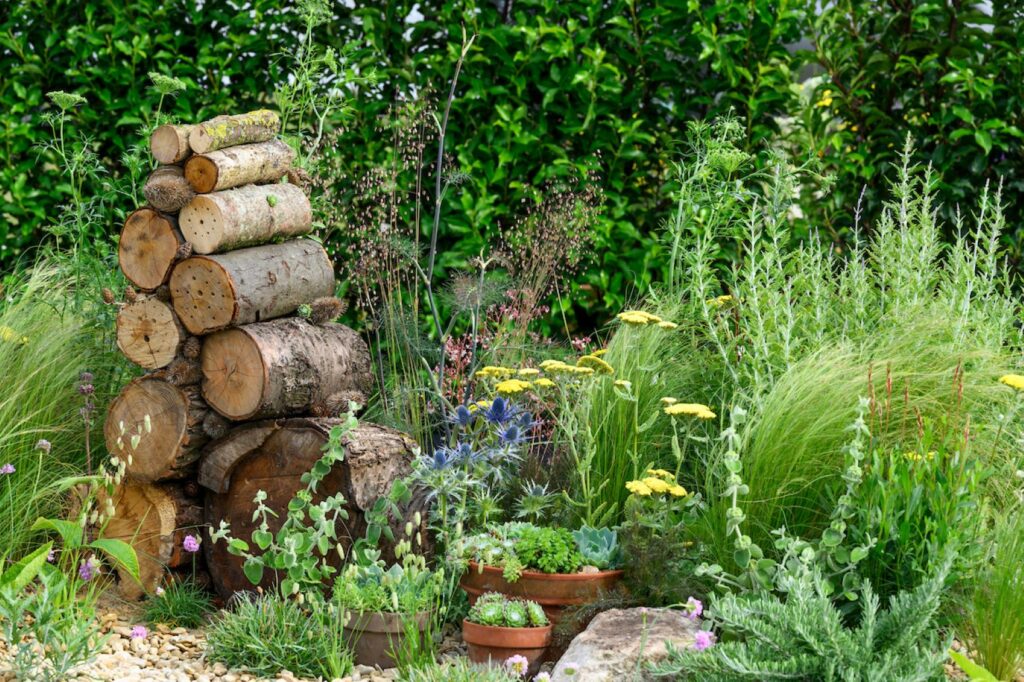
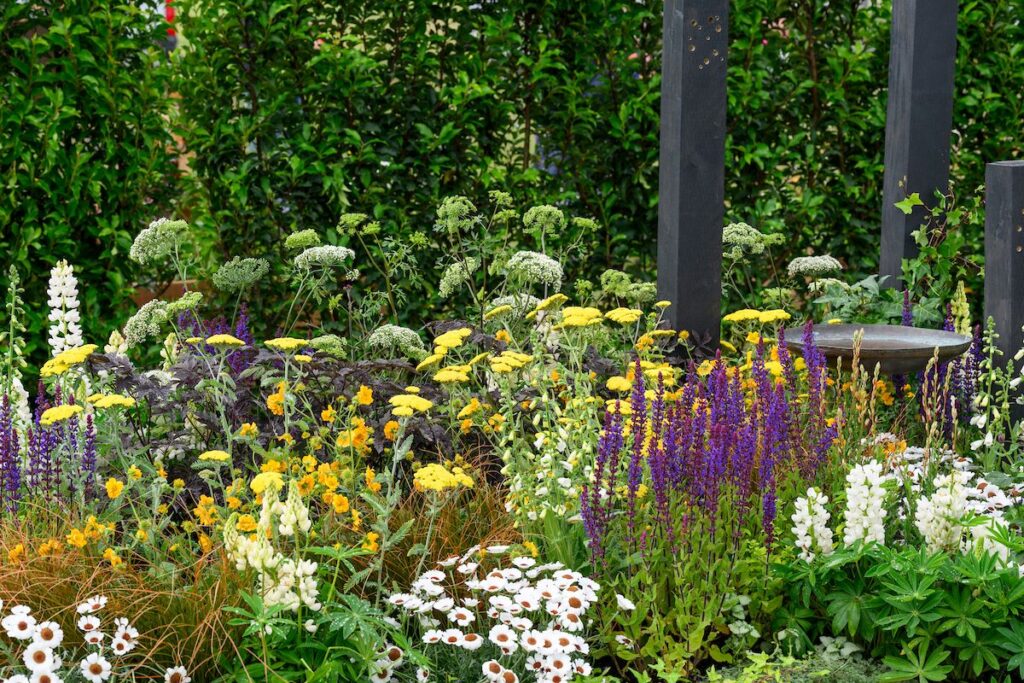
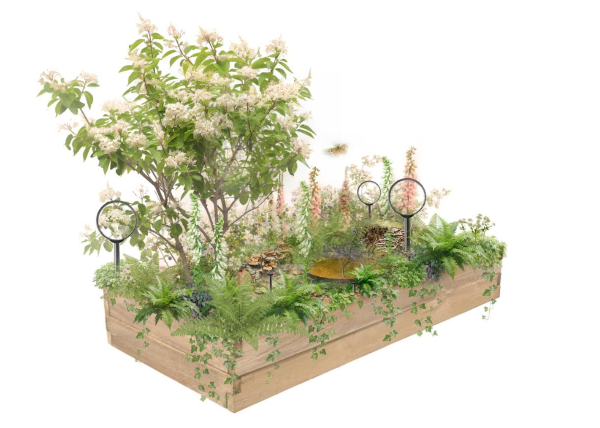
Rooted in Recognition, inspired by Rooted in Nature, responds to the growing disconnect between children and woodland ecosystems. By age ten, many can recognise thousands of logos yet struggle to name common plants and wildlife, though naming is the first step toward connection. As woodlands face increasing pressure from habitat loss, climate change, and human activity, nurturing understanding is vital. The border draws on the frond shape of a fern, highlighting the natural shapes we see in nature, while a magnifying-glass motif encourages careful observation and curiosity. Habitat features highlight biodiversity, and take home cards inspire continued exploration in local woodlands.
Wild, Old and Cultivated
Designed by Peter Gadsdon
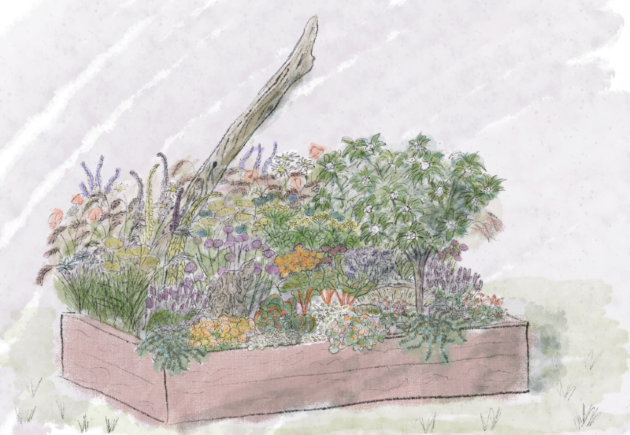
This design seeks to playfully integrate the wild, old and cultivated, with food and habitat for all sorts. Anchored with ‘standing deadwood’, this is a nod to ancient habitats – living and being reworked – on the margins and midsts of fields, often reflecting bygone woodlands. It features a backbone of native wildflowers, once often seen in fallow fields or around the edges of crops such as barley – a marker human interaction.
Not too neat, it leans towards non-hybridised, old fashioned edible cultivars and companion-planting, but doesn’t mind collaborative ‘non-natives’. It seeks to blur edges, celebrate working together, abundance and healthy, living resilient soil!
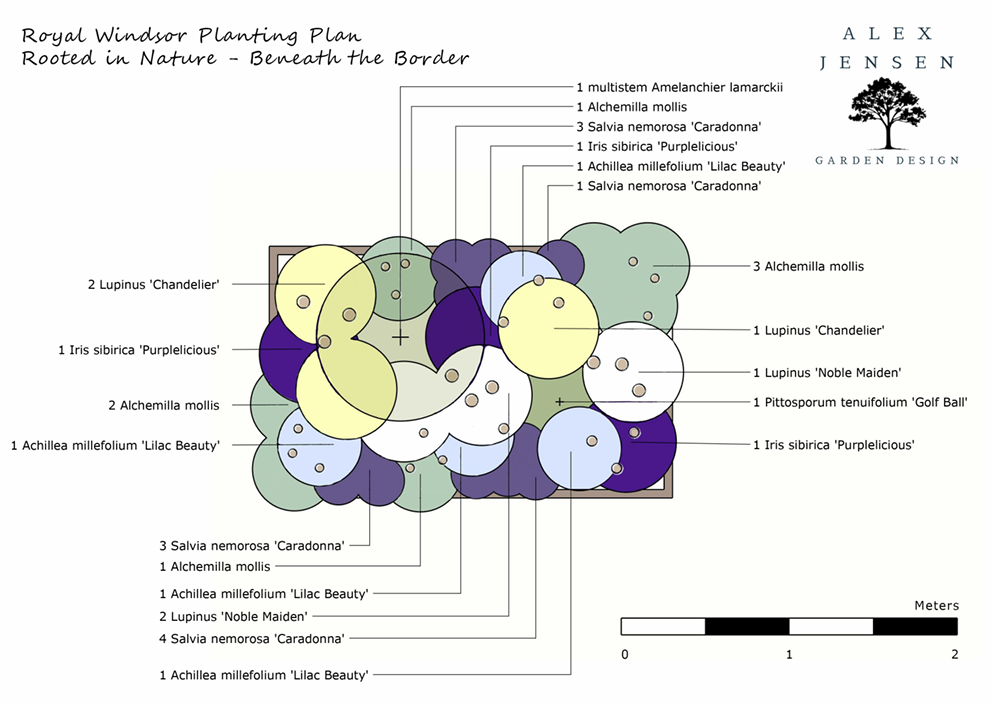
Beneath the Border
Designed by Alex Jensen-Humphreys
Beneath the Border explores the idea that root structure is as important as flower in plant selection. Designed for compacted clay soils common in the UK, this border demonstrates horticultural understanding through a carefully composed palette of perennials chosen for their contrasting root systems. Mixed fibrous-rooted plants stabilise and build the upper soil layers, while the rhizomatous roots of Iris sibirica navigate and bind the surface. Woody-rooted Pittosporum provide long-term stability. At the core, Lupinus penetrate dense soil, improving aeration and drainage, while fixing nitrogen to naturally enrich soil fertility and demonstrating how planting can actively transform the ground below.
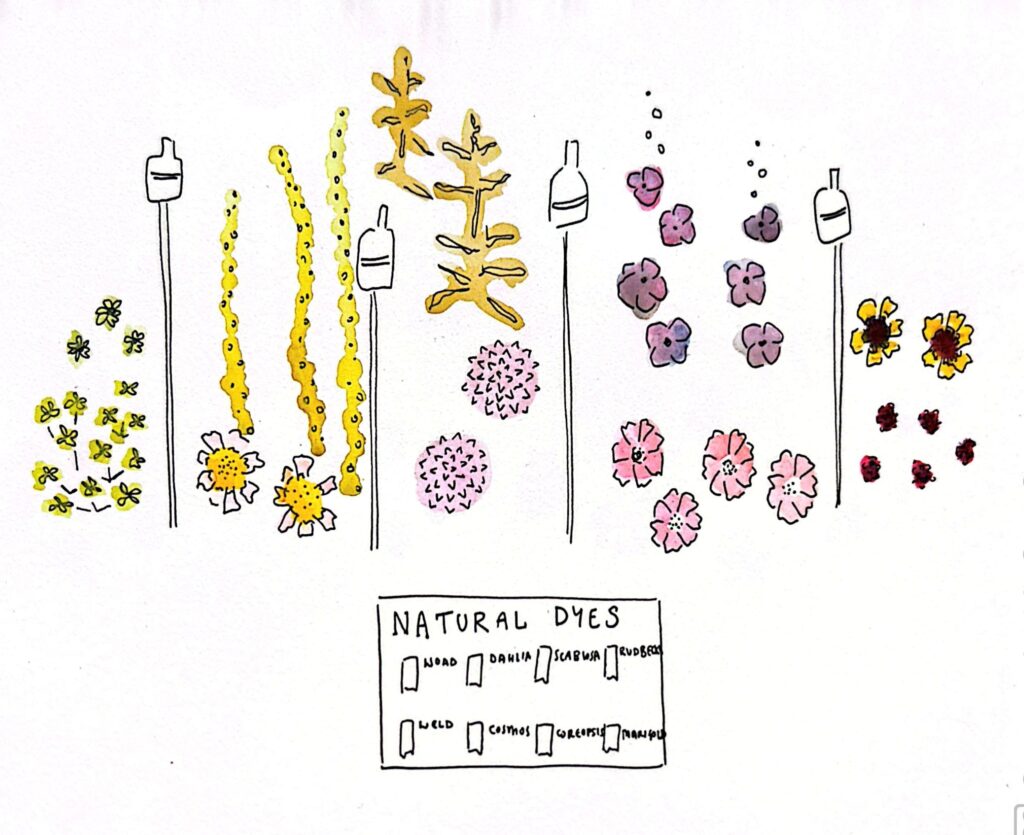
Natural Dyes
Designed by Louisa Macleod
Exploring the historical and creative connection between people and the botanical world through the lens of natural dye plants which we have learnt to use over the past 5,000 years including; Dyer’s Chamomile, Marigolds, Dyer’s Hollyhock, Coreopsis, Goldenrod, Cosmos, Dahlia, Rudbeckia, Black Scabiosa, Safflower, Weld and Woad.
For thousands of years we relied on these plants to produce sustainable dyes for textiles and inks for craftsmanship. Through this process, we cultivated a closer connection to our environment, becoming more attuned to the qualities of what grows around us.
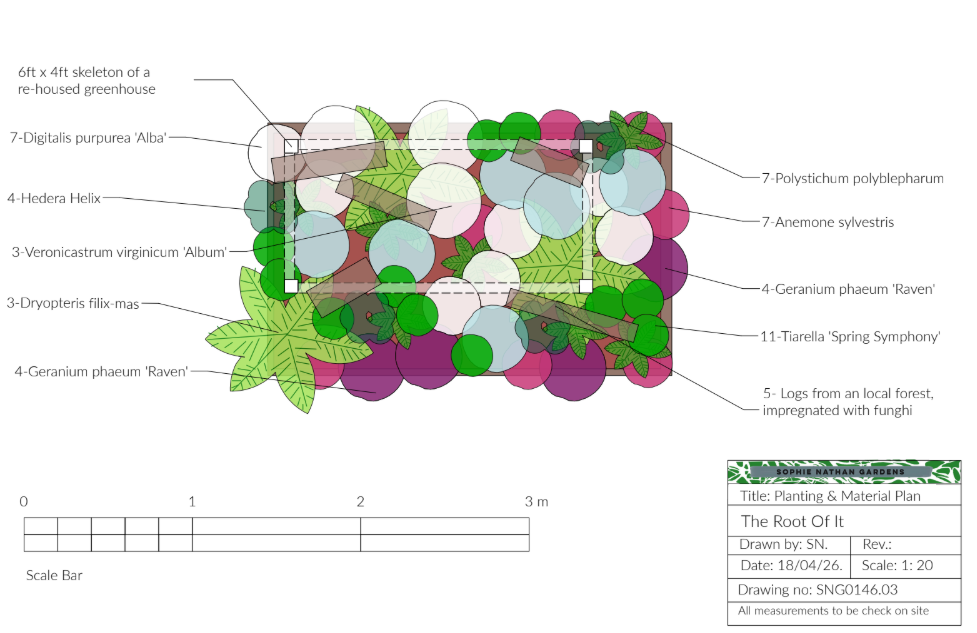
The Root of It
Designed by Sophie Nathan
We have long tried to control nature — to contain, manage and improve it. This garden asks what happens when we stop, and instead begin to care for it, as it cares for us. At its centre, a reclaimed greenhouse frame, once built to control nature, is now held within the landscape, with moss, ferns and fungi moving through its structure. Deadwood and planting tell a quiet story of exchange — materials given, transformed and returned through the system. Planting is interwoven from woodland floor to forest edge, each element supporting the others. All materials are reclaimed or sustainably sourced. What if we stopped managing nature — and simply learned to be part of it?
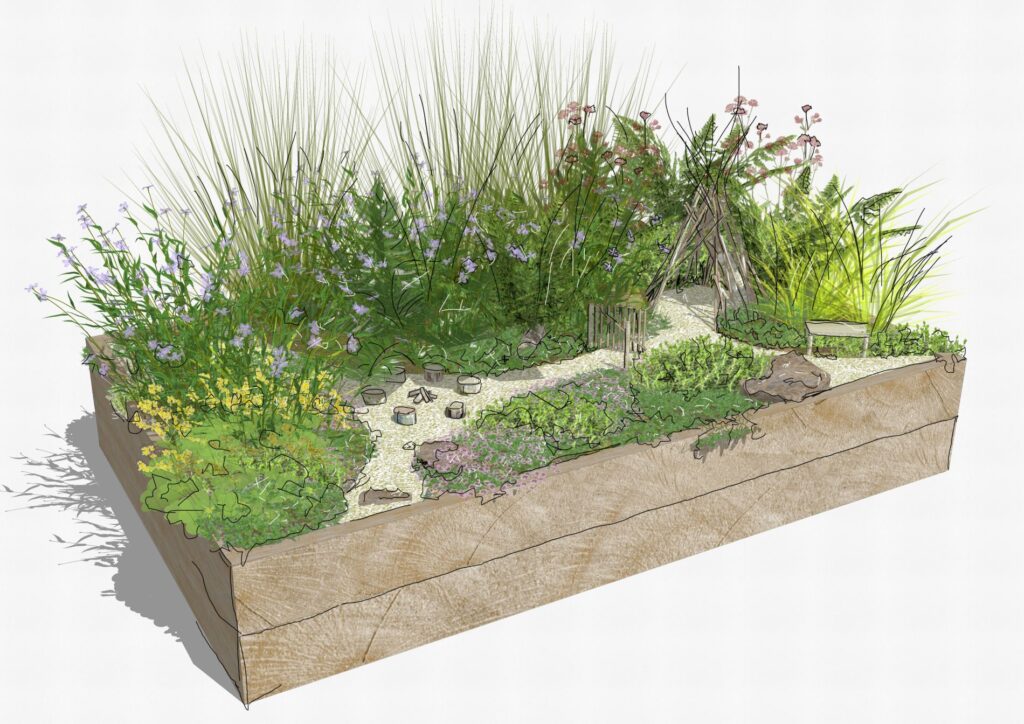
A Place for Play
Designed by Victoria Stanton
For generations, the natural world has been both playground and classroom, encouraging a timeless connection through exploration, measured risk and joyful discovery. The border is designed with a dual purpose; to be a small-world, scaled play space within nature and in addition, a concept that can evolve and expand into life-sized reality. It celebrates the vital role of plants in play – within a snug, immersive setting, grasses become wind instruments, herbs inspire magical potions, foraged twigs form structures and flowers invite friendly pollinators. Thoughtful planting and a considered use of space encourage hands-on discovery. Here, curiosity is sparked, confidence blossoms and play is deeply rooted in nature.
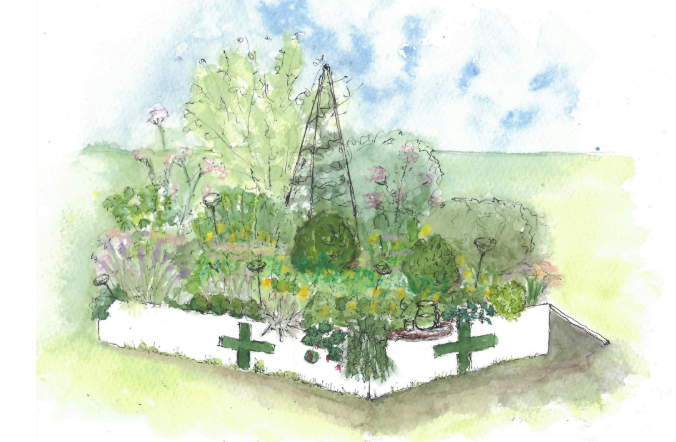
The Permaculture First Aid Kit
Designed by Sarah Stiell
The Permaculture First Aid Kit creates a community of plants that can be used to treat our minor ailments. These plants can also look after each other – some drawing nutrients from deep underground using tap roots, others fixing nitrogen from the air. The human contribution to this community chooses plants for pollinators, provides hydration and a snip here and there.
We cannot separate the health benefits of sipping an infusion of thyme and honeysuckle from the quiet healing of tending to each other and the plants and the wildlife around us. We are all ‘rooted in nature’.
Planning your day

Save The Date!
Stay Updated
with Our Newsletter
Join our community of gardening enthusiasts and receive the latest tips, events, and exclusive offers straight to your inbox. Don’t miss out on the chance to enhance your gardening journey!